Training and speakers
Identification does not happen where we work. It happens where you do.
Call to Freedom offers monthly trainings tailored to specific community sectors and how you might see trafficking in your own sphere. Our staff is dedicated to bringing awareness of human trafficking to the community.
Choose your sector
What your team is already placed to see.
We tailor the session to you. The indicators below are a sample of what a sector-specific training covers, not the whole curriculum.
Hotels, motels, and short-term rentals
Front desk, housekeeping, and night staff are placed to see the same room, the same guest, and the same pattern across a stay. Almost no one else is.
- A guest who pays cash, extends repeatedly, and refuses housekeeping
- Someone who is never seen without the person who checked them in
- Frequent visitors to one room over a short period
- A young person whose ID is held by someone else
- Requests for extra towels and linens far beyond the registered occupancy
Emergency departments, clinics, and dental
Medical staff meet people at the point where the body finally forces the issue. It is often the only appointment a trafficked person is permitted to keep.
- An accompanying person who insists on staying and answers for the patient
- Injuries that do not match the explanation given
- Repeated sexually transmitted infections, or repeated terminations
- Untreated chronic conditions alongside recent injuries
- A patient with no identification, no insurance, and a scripted history
Trucking, transit, rideshare, and fuel stops
Trafficking moves along corridors, and the people who work those corridors see the same faces at the same places at hours when nothing else is open.
- A young person travelling with an unrelated adult who controls the documents
- Someone moving between vehicles at a fuel stop late at night
- A passenger who does not know where they are going or who is paying
- Repeated short trips to the same hotels or addresses
- CB or app chatter offering commercial sex at a truck stop
Teachers, counselors, coaches, and resource officers
Schools see the change before anyone else does, because they see the same young person every day and know what normal looks like for them.
- Chronic running away, or a return with new items and no account of where they were
- A new older boyfriend, girlfriend, or mentor met online
- Sudden withdrawal from friends, sport, and attendance
- A second phone, or accounts no adult is allowed to see
- Unexplained money, clothes, nails, or a job they cannot clearly describe
Officers, investigators, and court personnel
The people most likely to be arrested in a trafficking situation are often the victims of it. Trauma-informed response changes what a person is willing to say.
- A person charged with prostitution, theft, or drug offences who is being directed by someone else
- A protective adult who insists on speaking for an adult detainee
- Recanted statements and returns to the same address
- Branding tattoos and injuries inconsistent with a stated account
- A minor involved in commercial sex, which is trafficking under federal law regardless of consent
Ministry teams, small groups, and volunteers
People in crisis often approach a church before they approach an agency, and often long before they will approach law enforcement.
- Someone asking for help with rent, transport, or documents but vague about their situation
- A member whose new relationship has isolated them from the congregation
- A young person being driven to services by an adult no one knows
- A family asking for help finding a missing teenager who keeps returning
- A newcomer whose work and housing are both controlled by the same person
Retail, agriculture, construction, and staffing
Labor trafficking hides inside ordinary employment: a crew, a contract, a shift. The people who manage that work are the ones placed to notice.
- Workers whose wages route to a third party, or who are never paid directly
- Housing provided and controlled by an employer or recruiter
- A debt to a recruiter that grows no matter how much a person works
- One person holding the documents for an entire crew
- Excessive hours with no days off and no ability to leave the site
What people leave with
Not awareness. Competence.
A trained room sees what an untrained room walks past, and that difference is somebody's whole life.
-
The indicators, in your context
Sex trafficking, labor trafficking, and commercial sexual exploitation as they actually appear in the specific work your team does.
-
Why victims behave as they do
How trauma changes behavior, and why a person may decline help, protect a trafficker, or run.
-
What to say, and what never to
Including why confrontation escalates danger and can end the only chance to reach someone.
-
Exactly how to report
Who to call, in what order, and what information is worth writing down first.
-
The local resource map
Where a person goes next in South Dakota, so your team is not left holding a situation they cannot resolve.
-
A named contact
After a training, your organization has someone at Call to Freedom to call rather than a general line.
Formats
Four ways we come to you.
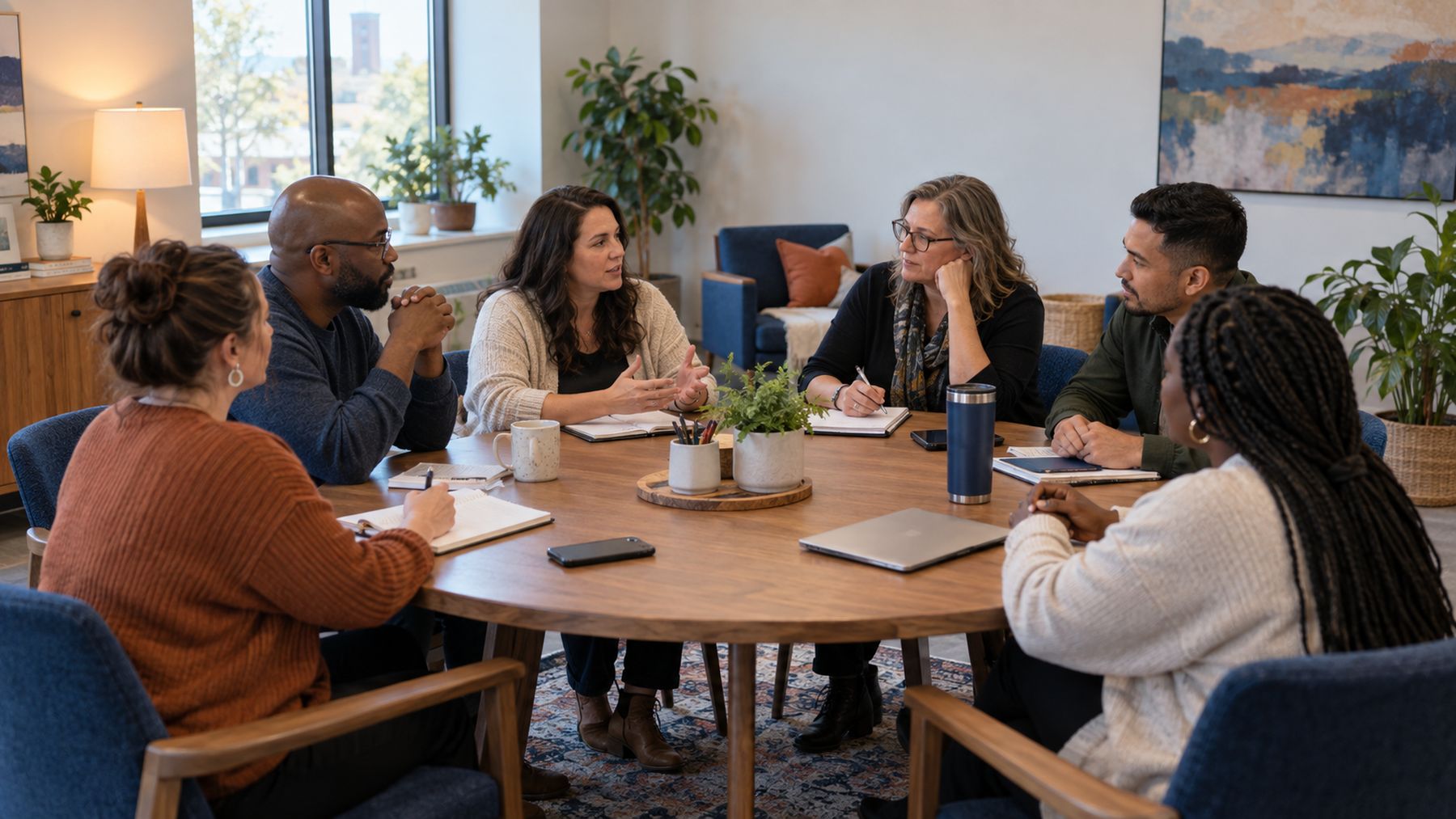
In person across South Dakota, and virtually for organizations outside the region.
Staff training
A sector-specific session for a team, from a short awareness briefing to in-depth trauma-informed training for professionals working directly with survivors.
A speaker at your event
A keynote or breakout session on trafficking, exploitation, and trauma-informed response, for conferences, civic groups, and congregations.
Parent Connections
Our training series for parents, guardians, family members, and support systems who want to protect the young people in their lives.
Community education
Open sessions for anyone who wants to understand what trafficking looks like in South Dakota and what to do about it.
Youth prevention in schools
Evidence-based curricula for kindergarten through 12th grade, delivered free to schools and youth organisations. See the prevention programme.
Request
Bring Call to Freedom to your team.
Tell us who your audience is and what you hope they walk away with. We will match the right trainer or speaker and propose a format and length.
Questions first? Call 605-261-1880.
There is no charge to your organization for a training. Every session we deliver is underwritten by donors who decided that identification should not depend on luck.
Awareness is only the start.
A trained room sees what an untrained room walks past, and that difference is somebody's whole life. Call to Freedom offers monthly trainings tailored to specific community sectors and how you might see trafficking in your own sphere.